|
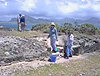
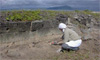
Most of Earthwatch volunteers' time was expended on the careful clearance and recording of the Upper Battery Parapet wall,
gun emplacements and related features as well as portions of the Central Platform. Heavy work was done by workmen under close supervision.
Recording included note taking, making accurate scale drawings of revealed features and walling and making photographic records.
The high percentage of volunteer time and effort that was devoted to these aspects of the research was very much at their own request,
the interest generated by the discoveries being a greater pull than recording standing or other visible remains.
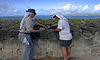
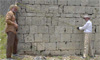
Other aspects of the project in which volunteers were concerned included measuring standing structures in order to make or complete architectural plans,
sections and elevations. Added to this was the marking out and measuring of control points for digital photographic recording and rectification of wall faces,
particularly those of the upper battery. On the islet itself, most volunteers were also involved in building up the new database of 19 th century British army graffiti.
Jonathan Howe, Earthwatch staff, was put in charge of collating the survey of flora that was carried out under the direction of a professional Mauritian botanist,
Ashok Khadun, from the Wild Life Trust of Mauritius.
In the last week, because cyclonic weather made it impossible to reach Ile de la Passe,
one entire day was devoted to making a detailed preliminary study of the two lime kilns and associated structures on the nature reserve at Ile aux Aigrettes which the
Wild Life Trust want to restore as a feature for visitors.
|